Thursday, August 3, 2006

Magical Country With Mysterious Origins


Even the Estonian Musuem staff do not know where Estonians came from... quoting them: "it is a big mystery but we think we are descendant from the Haseatic Tribes of Siberia". There you have it. Estonia (pop 1.4 million) covering only 45,000 square kilometers ( a third of Greece) is not sure of its origins. What they can tell us is that they are not Slavic and their language is very close to Finnish! One thing is for sure, Estonia has had a turbulent history. They have been occupied by Germany, Russia, Denmark and even Sweden. No wonder they are confused about origins!

Tallinn (pop 371,000) is a UNESCO protected tourist haven. A magical place of cosy cobbledstone streets, great coffee and very very cheap eating. St Olaf's church has a 159m tall bell tower (first photo shows view of old town from tower) that made it the tallest structure in the world in the early 13th century! "Toompea" is the elevated part of the old town containing the old castle, Orthodox Nevsky Cathedral and now houses the parliament of Estonia since independence in 1991 (second photo shows view of the lower old town from Toompea). The main square "Raekoja Plats" is a statistitians wonderland (bottom photo): it contains the world's oldest pharmacy, town hall and even the highest toilet up to the early 1900's (77m high in the town hall tower). The best thing about Estonia and Tallinn is the willingness of locals to help tourists, high use of English, small walkable sites and yes, the 10-15AUD meals (with beer)!!! Distance travelled so far: 16,109km (Total distance covered in Russia by train: 2,440km).

Tuesday, August 1, 2006

Orthodox Saint Petersburg


St Petersburg also has a large share of the rich Russian Orthodox heritage. A highlight for us was attending the Sunday Liturgy (mass) at the 1900AD Cathedral of St John of Kronstadt which contains his relics and is part of the convent he founded (first photo). St John is a very popular Russian Saint and one that spent a lot of time advising youth.

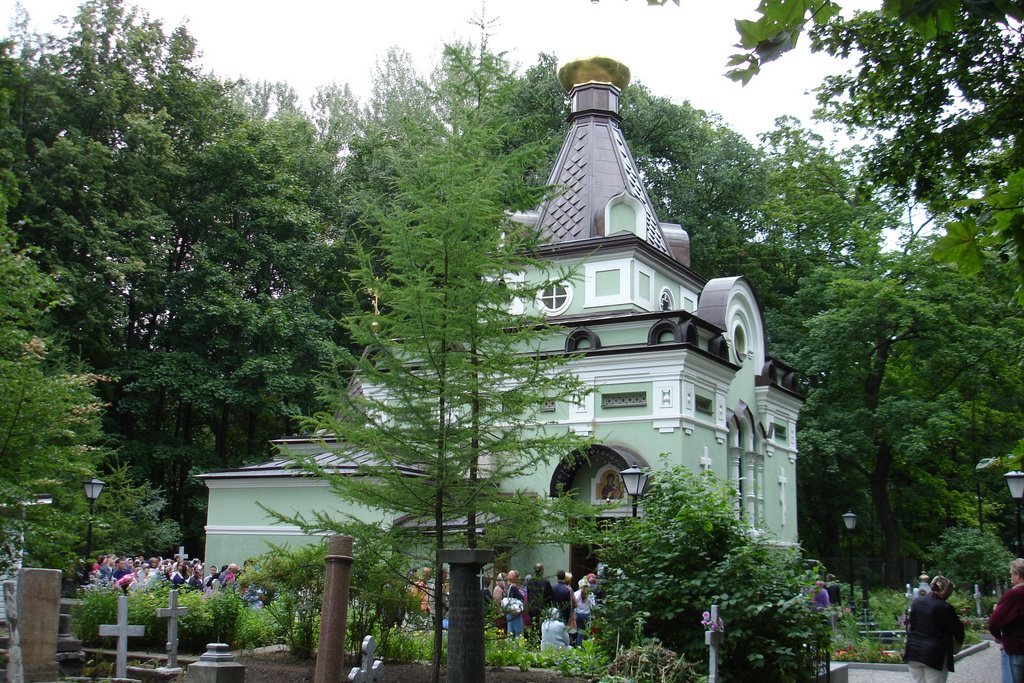
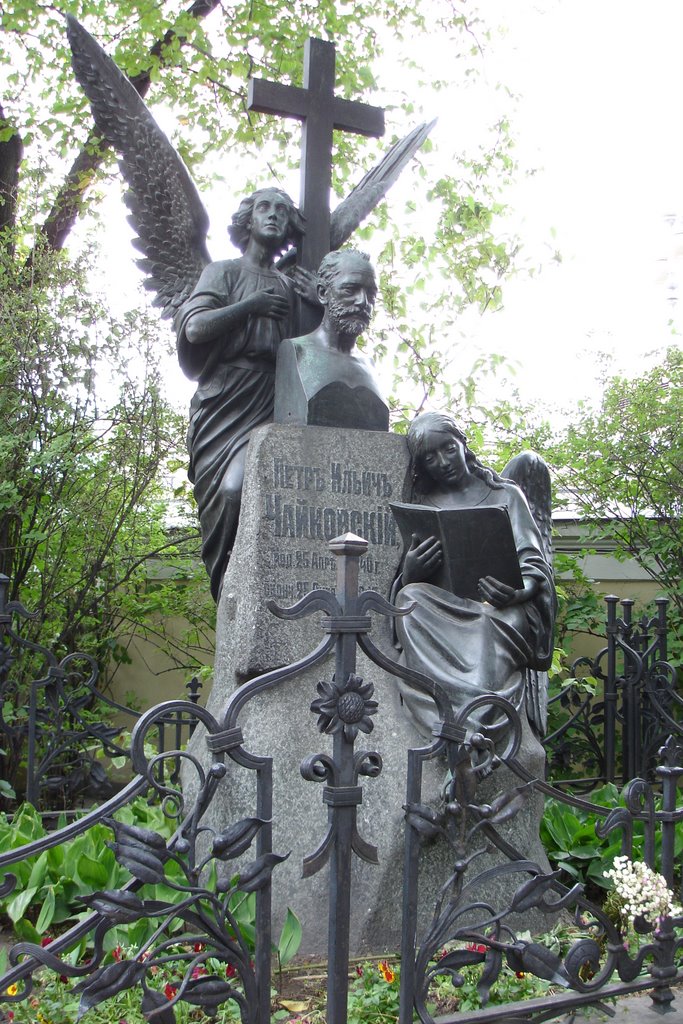
St Petersburg has a large Orthodox cemetery hidden in a thick forest, only 8km from the centre. In its centre is a small chapel housing the relics of St Xenia (second photo) - we were lucky to be annointed with oil blessed on her tomb. We also visited the 1789 Cathedral of St Price Vladimir who, on behalf of the Tsar, "selected" Orthodoxy as the official christian religion for Russia in 988 (photo three). Our next stop was the Alexander Nevsky Monastery, founded in 1713 by the Prince of the same name to commemorate the victory of the Russians in the Neva battle of 1240. This monastery also contains the Tikhvinskoe Cemetery, founded 1823 with 147 graves of the most well-known musicians, artists, scientists and politians of the city and Russia, including: Tchaikosvsky (bottom photo), Dostoevski (author) and Ivanov (grand master artist with works in Hermitage).

Many of Russia's monasteries and churches were closed down by the communist regime (mainly in the thirties) and used as orphanages, hospitals or left to deteriorate. Many were re-opened in the mid fifities and early eighties and now there is extensive rennovations in progress to restore them. It is apparent to Paul and I (especially when we visited the Smolensky Cathedral which is now a concert hall) that some "deal making" needed to happen to get the more important churches back to the Russian Orthodox Church (especially those founded by Saints).

We farewell a grand city and Russia. Our summation is that Russia is like someone who has awakened from a long sleep. There is still a lot of work to do especially to update aging infrastructure and be better prepared for tourism but the encouraging news is that there are visible signs that change is happening. Russia will be an even greater place to visit in 10 years time!

The Paris of Russia


St Petersburg is the "Paris" of Russia: essentially built by Peter The Great in 1703 as a "royal city" and it shows! Classic French-Baroque buildings downtown but as you step back into suburbia the "classic" remains but the dirt creeps in, big time! Lets say it is the "grubby" Paris of Russia. St Petersburg has almost 5 million people, half the population of Moscow and Europe's fourth most populous city. It is built on 44 islands and 55 canals at the end of the Baltic Sea.

The first photo shows its greatest prize - the Hermitage. It is one of the world's largest art musuems with just over 3 million pieces housed in the former sumptious, dripping with gold Winter Palace of Peter The Great (1672-1725). Peter's wife the "whole lot of woman" Catherine The Great started this art collection with 255 pieces in 1764. The Hermitage is absolutely grand and ornate. The whole thing is like having a Louvre inside Versailles or Prado inside Palacio. Paul and I spent 4 hours covering this beast. Apart from the actual rooms, furniture, sculptures there are paintings from all the grand masters of Europe. The Alexander Column in the first photo is the place where, on 7 November 1917, the Bolsheviks, lead by Lenin, seized power from the royals (Tsar Nicholas II) and started communist Russia (which fell in 1997). The second shows one of the rooms inside the Hermitage (Palace).

The other great site of the city is the Peter and Paul Fortress, which Peter The Great founded as the original city in 1703 (photo two). Peter then built the Peter and Paul Cathedral in 1733 (photo three) which now houses his grave, his wife's Catherine and most of the Russian royalty which spanned 1613 (Mikeil Romanov) to 1917 (Tsar Nicholas II). The other site of note is the Cathedral of Our Saviour On Spilled Blood (bottom photo), built in 1881 on the spot where Tsar Alexei II was murdered - hence the name. The amazing thing about this church is that the entire interior is covered in icons made entirely of mosaic glass - took 32 artists 12 years to complete. Other sites visted: 1858 St Issac's Cathedral with its impressive 260 step view and 100kg of gold on its dome, Our Lady of Kazan Cathedral containing the body of the General who defeated Napoleon in 1812 and the Dostoevsky House and Musuem.

Saturday, July 29, 2006

Orthodox Moscow


Orthodoxy has been undergoing a huge revival since communism fell in 1997. It is roughly estimated that approx 27 million Orthodox Christians were persecuted and killed in the former USSR between the 1917 Lenin Bolshevick Revolution to the middle of the cold war in the late fifties. Many monasteries were closed but are now open, back with the faithful and undergoing restoration.

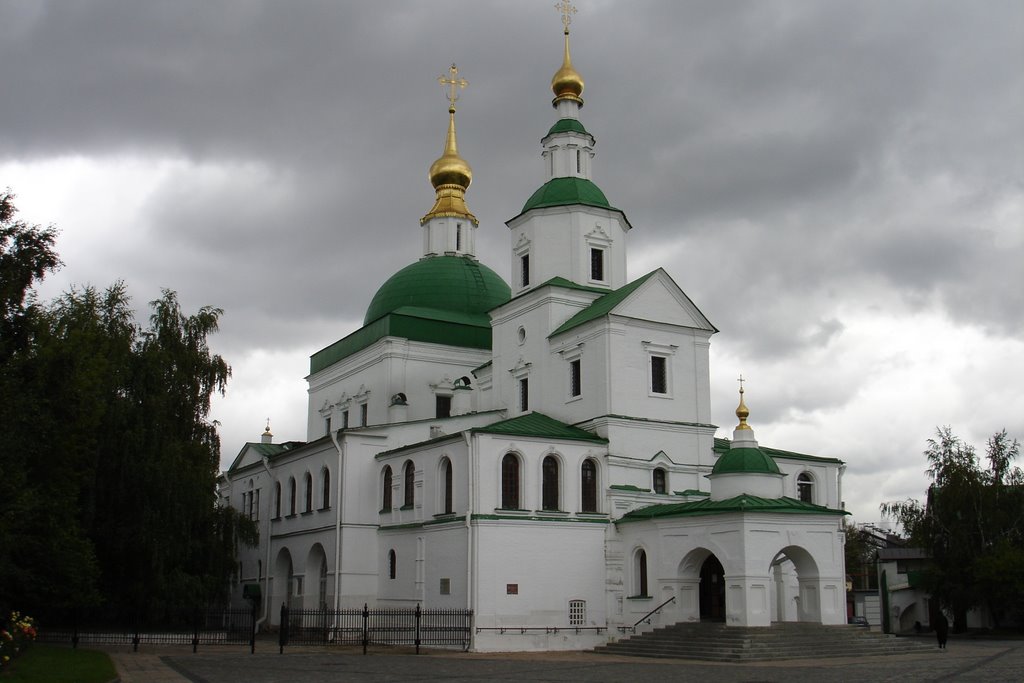
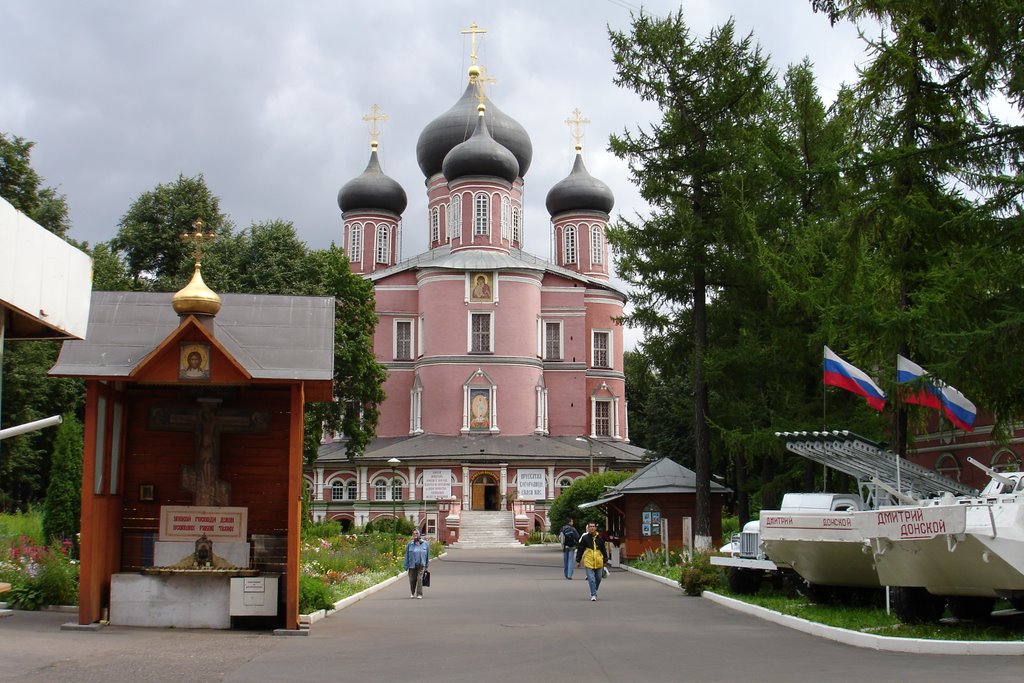
We visited four major monastic centres in Moscow. The first photo shows the Holy Trinity St Sergius Monastery in Sergei Posad (pop 200,000, approx 70km from Moscow). This monastery was founded by St Sergius of Radonezh in 1337 and is the most visited by Russians and Orthodox abroad. It consists of several churches which contain the relics of many saints that we saw: St Sergius, St Maximus the Greek, St Moscovitz, St Filaret and St Innokenty. The second photo is typical of Russian Orthodox Iconostasis (icon screen in front of alter) - lots of gold, lots of detail, lots of work! The third photo shows the main cathedral and bell tower of UNSECO protected Novodevichy Monastery, approx 5km south west of the Kremlin: built in 1525 by Grand Duke Vasilli II in thanksgiving of Russia's defence of Smolensk (a city near Poland) from the Polish. Just next to Novodichy is a monastery where all the rich and famous of Moscow and Russia (ministers, actors, academics etc) are buried - we visited the grave of the late wife (Raica) of former President Gorbachev. The fourth photo shows the Cathedral of the Seventh Ecumenical Council in the St Daniel (Danilovsky) Monastery: the oldest in Moscow, approx 6km south of the Kremlin, founded by Prince Daniel of Moscow in 1303, closed by the communists in 1930, handed back to the Church in 1988 and now the adminstrative centre and residence of the Russian Orthodox Partriarchate headed by Alexei II. We were lucky to be shown around by Fr Iosef and venerated the relics of St Daniel in the church in the photo and those of St Georgy, another martyr of that period. The bottom photo shows the large all-male Donski Monastery, approx 7km south of the Kremlin, founded in 1591 by St Tychon (whose relics we visited) and is also protected by the Russian Army as the site which protected Moscow from Mogol invasions in the 16th and 17th centuries (hence the tanks in the photo!).

We noticed many Russian youths (twenty to thirty) coming to light candles in the city churches and yes, the Russian Orthodox Priests are still awesome 7 foot giants with huge beards! The chanting is as captivating as ever and the services as long as ever!

Thursday, July 27, 2006

I see Red


STOP PRESS: please note that the ABBA blog ("We Want ABBA") has been updated.

Moscow is big. Russia is bigger. We are overwhelmed. Our feet hurt. Paul bought new sneakers. Even without its former USSR states, Russia covers 17 million square kilometers (Australia covers 10 million). Moscow now has almost 10 million people and is officially Europe's largest city (in population).

First thing that hits you about Russia and Moscow is how imperial it is, ie, it still has big traces of red! The building in the first photo is actually our hotel (we stayed on floor 28 out of 29), converted from one of many "Stalin Scyscrapers" that dot the city.

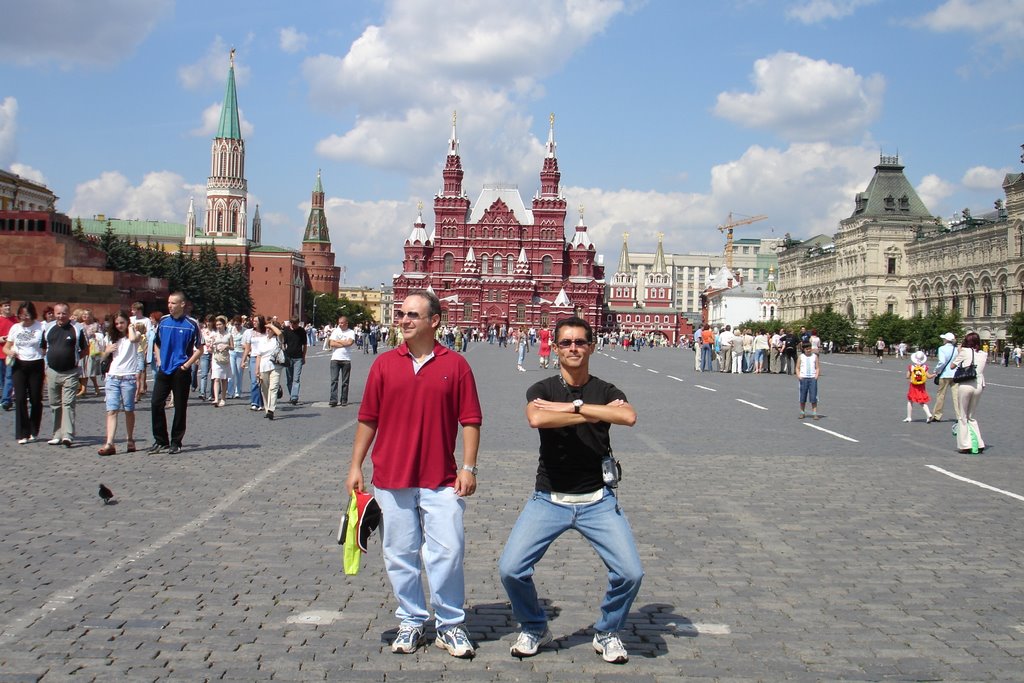
Red Square is.. well... red! In the second photo you have the red walls of the 1150AD Kremlin (walled city of the old and new government) all around you, Lenin's red and black marble mausoleum (we waited 2.5hrs to see the preserved Lenin in a glass coffin - he looks like wax and has a golden "colonel sanders" beard!!!) and red with every other colour onion domes of 1561AD St Basil's (built by crazy Tsar Ivan The Terrible to "show off" and not actually a real Orthodox Church!). In the third photo is the other side of red square with the rest of the Kremlin, the red 1883AD Russian Historical Musuem and the not so red GAM old markets building that now houses the ritziest capitalist shopping centre in the city. The fourth photo shows you only part of the interior of the Kremlin which houses palaces (Old Tsars and Putin's house), the Senate, the 1489AD Annunciation Cathedral, the 1508AD Archangel Cathedral, the 1511AD Dormition Cathedral, three other churches, the magnificent Armory Musuem (collections of Russian antiquities from the royal Tsar "glory box"), the fabulous Diamond Fund (or Treasury, containing several kilos of diamonds, the world's largest flat diamond, even more kilos of gold and the largest chuck of platinum in the world) and even the largest bell in the world (202 tons and never rung). The Kremlin could easily take three days to visit and we did it in one and almost collapsed!

The Moscow subway is its strength. You never wait more than one minute for a train! It is always full of people. The trains are preshistoric but travel at warp speed! The metro has highly decorated stations (like a musuem, with marble, mosaics of Lenin, bronze statues of happy comrades, stained glass, art deco chandeliers, two have won USA New York architecture prizes). The folks in the country are generally friendlier - we met many "baboushkas" (grannies), who helped us out more than the city people!

The Russians in Moscow are exactly like the Greeks in the 70's and 80's: they cannot speak English, do not like tourists, use their heads to show you directions, grunt to speak, drive crappy cars (Russian built Ladas) with no seatbelts, taxis try to rip you off, public servants take breaks and keep you waiting and cars do not stop at the pedestrian crossing (there is only one in Moscow!).

We also visited Victory Park (a huge outdoor avenue, plaza, tower and semi-circular museum) commemorating Russia's victory over the French in 1812 and the Germans in 1945. The highlight for us was watching the Bolshoi Ballet of Tchaikovski's "Sleeping Beauty" - what a show!

The other aspect of Russia is its monasteries and churches - look at the next blog.

Wednesday, July 26, 2006

Land of Lakes and Islands


On the night of 22 July, our car C3PO and ourselves slept overnight (13 hours) on the massive 2500 person, Finnish "Viking Line" ship from Stockholm to Turku (top photo, Finland's oldest city, 750 years old!). From Turku we drove to Finland's capital Hellsinki (pop 560,000, founded 1550AD). Finland is 338,000 sq km (7th largest European country, two thirds France) with only 5.2 million people. It has 187, 888 lakes, 98,050 islands, is the official home of Santa Claus, was founded by the Swedes in 1155AD, became an independent republic in 1917, joined the EU in 1995 and adopted the Euro in 1999. The Fins are generally blond and blue-eyed and it takes time to get to know them. Their English is good, prices are expensive but cheapest amongst the Scandinavian countries. Helsinki is more imperial but the Fins do not like Russia and avoid visiting. Sites we visited included: the 1952 Olympic Stadium, the 19th century white and gold Lutheran City Cathedral, the largest Western European Upenski Orthodox Church (only 2% of the pop are Orthodox), the Esplanadi (cafe lined boulevard), outdoor harbourside markets and a harbour cruise to the UNESCO protected Swedish built, 1748AD fortress on the island of Suomenlinna. Naturally, all the lifts and elevators that we used in Finland were KONE! Finland is also home to Nokia. We left our little car at 16,080km in Hellsinki for a 9 day rest as we headed to Moscow on the Russian "Tolstoy" train!!!

Amazing Find


Here is an amazing find! This woman is wearing Agnetha's sunglasses! Yes, the very same ones Agnetha wore on tour to Australia with ABBA. We met her at Herman's, an amazing all-you-can-eat vego place with views of the Old Town in Stockholm.

She refused to sell them to us!